
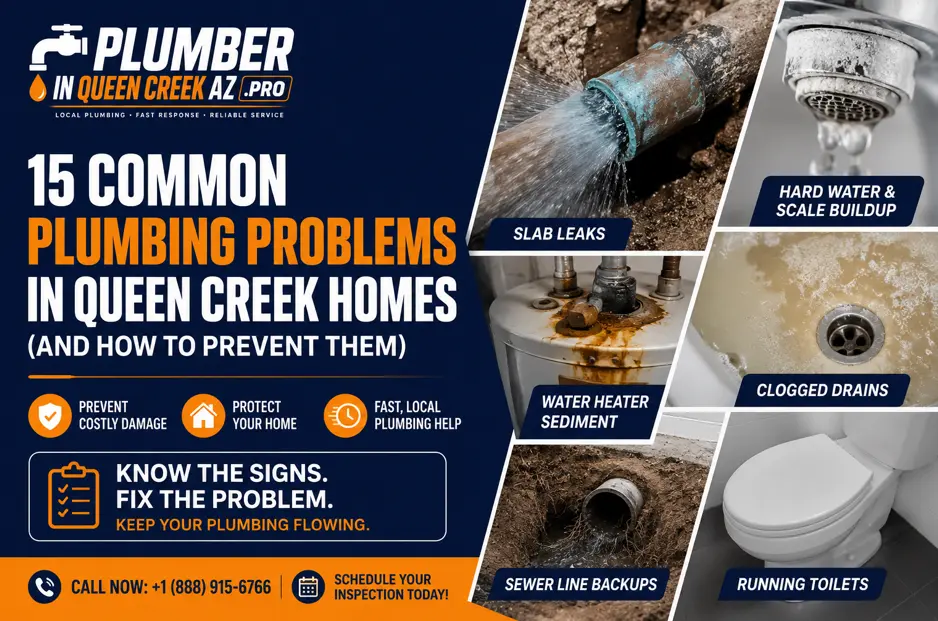
15 Common Plumbing Problems in Queen Creek Homes (And How to Prevent Them)
Queen Creek plumbing does not behave like plumbing in most of the country. Between the hard water, the slab foundations, and how fast new subdivisions keep going up, homeowners here run into a specific set of problems you will not find in a generic plumbing article written for somewhere with soft water and basements.
Plumber in Queen Creek AZ has worked on homes across Queen Creek, San Tan Valley, Gilbert, Chandler, Mesa, and Florence for 17 years now. Below is what we actually see on service calls, why it happens in this area specifically, and what stops it before it turns into a bigger repair.
Call +1 (888) 915-6766 or schedule an inspection if something below sounds familiar.
What Are the Most Common Plumbing Problems in Queen Creek?
Hard water scale, slab leaks, water heater sediment, clogged drains, and low water pressure top the list. Arizona’s mineral-heavy groundwater is the root cause behind most of them, and slab foundation construction makes leaks harder to catch early than in homes with basements.
Running toilets, hidden pipe leaks, sewer backups, and failing water softeners round out the rest. Almost none of these start as emergencies. They start small and quiet, and get expensive because nobody notices them for weeks or months.
Common Plumbing Problems at a Glance
| Problem | Most Likely Cause | Recommended Action | Urgency |
| Hard water scale | Mineral rich groundwater | Install a water softener | Medium |
| Slab leak | Underground pipe damage | Professional leak detection | High |
| Water heater sediment | Mineral buildup in tank | Annual flush or repair | Medium to High |
| Clogged drains | Grease, hair, debris | Professional drain cleaning | Medium |
| Sewer backup | Blocked sewer line | Same day service | Critical |
| Running toilet | Worn flapper or fill valve | Repair promptly | Medium |
| Hidden pipe leak | Corrosion or loose fittings | Leak inspection | High |
| Low water pressure | Mineral buildup or leaks | Plumbing diagnosis | Medium |
Why Queen Creek Plumbing Problems Look Different
Three things set this area apart, and it is worth understanding them before you read the list of problems below.
Start with the water itself. Groundwater across most of Arizona carries a heavy load of dissolved calcium and magnesium, a byproduct of the region’s underlying rock and soil. That is not a minor inconvenience. It means every pipe, water heater, and fixture in your house is fighting mineral buildup from the day it is installed, faster than the same fixture would in a state with softer water.
Then there is the foundation. Most homes in Queen Creek are built on a slab, which means the water and sewer lines run underneath the concrete rather than through a basement or crawlspace you can walk into and inspect. A leak under there can run for weeks before anyone notices, because there is nothing to look at.
And then there is growth. Queen Creek has been adding residents faster than almost anywhere else in the state over the past several years, and the town is on pace to roughly double its current size in the decade ahead. A lot of that growth is brand new construction, and new construction means plumbing systems that are still settling, literally, with the soil underneath them. Installation issues that would show up immediately in a slower-growing town sometimes take a year or two to surface here.
The 15 Most Common Plumbing Problems in Queen Creek Homes
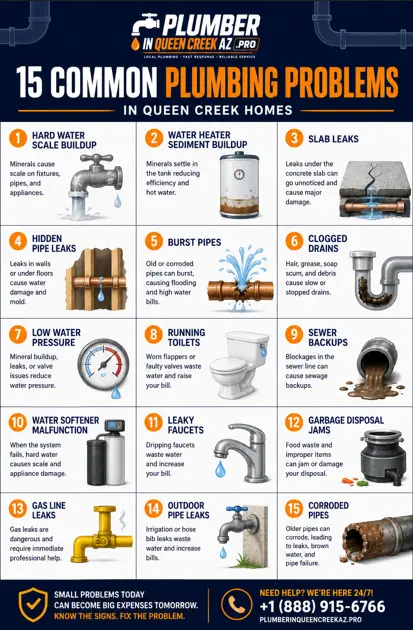
1. Hard Water Scale
Symptoms: A white, crusty film builds up around faucets and shower heads. Soap will not lather the way it should, and dishes come out of the dishwasher spotted instead of clean.
Cause: Calcium and magnesium in the water supply, left behind as it evaporates or moves across surfaces.
Prevention: A whole home softener strips the minerals out before they ever reach a fixture.
When to call: Once scale shows up on more than one fixture, or your water heater starts heating unevenly, it is worth having someone look. More on our water softener installation page.
2. Water Heater Sediment
Symptoms: Popping or rumbling from inside the tank, along with hot water that runs out faster than it used to.
Cause: Minerals settle at the bottom over time and insulate the heating element, so the unit has to work harder to reach the same temperature.
Prevention: Draining and flushing the tank once a year keeps that layer from thickening.
When to call: If your water heater has passed the eight-year mark without ever being flushed, that is very likely why it is struggling. See our water heater repair page.
3. Slab Leaks
Symptoms: A warm patch on the floor, a water bill that spikes with no explanation, or the sound of running water even though every fixture in the house is off.
Cause: Corroded pipe, shifting soil, or a construction defect underneath the concrete.
Prevention: Annual leak detection is really the only way to catch these before the damage spreads, since there is no exposed pipe to check visually.
When to call: Right away. By the time you can feel a warm spot, the leak has usually been running for a while already. See our slab leak repair page.
4. Hidden Pipe Leaks
Symptoms: A musty smell that lingers in one part of the house, drywall or flooring that looks discolored, or a water meter that keeps ticking with everything shut off.
Cause: Corroded fittings or joints that have loosened inside a wall, out of view.
Prevention: A yearly plumbing inspection is what catches these before they turn into a drywall repair.
When to call: As soon as any of the symptoms above show up. These do not resolve on their own. Our leak detection page covers how the check works.
5. Burst Pipes
Symptoms: A sudden loss of pressure, water pooling somewhere it should not be, or a water bill that jumps overnight.
Cause: Old, corroded pipe giving way under ordinary water pressure, sometimes pushed along by a rare hard freeze.
Prevention: Replacing aging sections of pipe before they fail, and knowing where your main shutoff valve is located ahead of time.
When to call: Immediately, after shutting off the main valve first. Repair details are on our pipe repair page.
6. Clogged Drains
Symptoms: Water draining slowly, gurgling sounds, or standing water that will not clear.
Cause: Grease, hair, and soap residue narrowing the inside of the pipe over time.
Prevention: Keeping grease out of the drain in the first place, and using a simple cover to catch hair.
When to call: When a plunger or drain snake stops working. Hydro jetting clears buildup that basic tools cannot reach.
7. Sewer Line Backups
Symptoms: Several drains backing up at once, a sewage smell, or toilets gurgling on their own.
Cause: Tree roots growing into the line, a collapsed section of pipe, or grease buildup further down the main line.
Prevention: A sewer camera inspection every few years, particularly in older parts of town.
When to call: Same day, no exceptions. This is a health hazard in the meantime. More at our sewer line repair page.
8. Running Toilets
Symptoms: A steady trickle of water into the tank, and a water bill that keeps creeping up for no obvious reason.
Cause: A worn flapper valve, or a fill valve that will not fully close.
Prevention: Swapping out the flapper every few years, since the rubber degrades on its own with age.
When to call: Once jiggling the handle stops fixing it. Our toilet repair page has more.
9. Low Water Pressure
Symptoms: A weak shower, or a tub that takes noticeably longer to fill than it used to.
Cause: Either mineral buildup narrowing the inside of your pipes, or a leak somewhere pulling pressure away from your fixtures.
Prevention: A softener addresses the mineral side. A leak detection check rules out the second possibility.
When to call: If the drop happens suddenly rather than gradually, since a sudden change usually points to a leak. Leak detection service can pin down the source.
10. Dripping Faucets
Symptoms: A steady drip you notice most at night, and a water bill that slowly creeps up over time.
Cause: A worn washer, O-ring, or valve seat inside the faucet body.
Prevention: Replacing internal parts as soon as the drip starts, rather than letting it run for months.
When to call: If tightening the handle does not stop it. See our fixture repair page.
11. Garbage Disposal Problems
Symptoms: A humming sound with no grinding, a bad smell, or water backing up into the sink.
Cause: A jam or buildup of food waste and grease inside the unit.
Prevention: Running cold water while grinding, and keeping fibrous scraps like celery and corn husks out of it altogether.
When to call: If it hums but will not turn, or keeps tripping the breaker. Do not force it. See our garbage disposal repair page.
12. Leaking Hose Bibs
Symptoms: Water dripping from an outdoor spigot even with the handle fully off, or damp soil around the connection.
Cause: A worn washer or a cracked valve, often worsened by Queen Creek’s heat and heavy summer irrigation use.
Prevention: A quick seasonal check, especially right before irrigation season ramps up.
When to call: If tightening the handle does not fix it. Our residential plumbing page covers outdoor fixture repair.
13. Water Softener Failures
Symptoms: Hard water symptoms creeping back in, or a salt bridge forming inside the brine tank.
Cause: A clogged resin bed, a broken control valve, or that salt bridge blocking regeneration.
Prevention: Cleaning the brine tank periodically and checking salt levels once a month.
When to call: If your water feels hard again despite having a working softener installed. See our water softener installation page.
14. Aging Plumbing Fixtures
Symptoms: Corrosion around fittings, inconsistent flow, or visible wear on faucets and valves.
Cause: Normal wear over years of use, sped up here by the mineral content in the water.
Prevention: Planning to replace fixtures on a 10 to 15 year cycle instead of waiting for one to fail.
When to call: As soon as corrosion or inconsistent performance shows up. Our fixture repair and installation page has more.
15. High Water Bills With No Clear Cause
Symptoms: A bill that keeps climbing even though nothing about your household usage has changed.
Cause: A hidden leak, usually a slab leak, a running toilet, or a hose bib that never fully shuts.
Prevention: Checking your water meter overnight with everything off. Any movement at all means water is going somewhere it should not.
When to call: As soon as you spot the increase. The sooner it is found, the cheaper it is to fix. See our leak detection page.
Where These Problems Usually Show Up
Certain rooms carry more of the risk than others, so it helps to know where to look first.
The kitchen tends to produce garbage disposal jams, slow sink drains, dishwasher connection leaks, and the occasional dripping faucet. The bathroom is where running toilets and shower drain clogs live, along with fixtures that wear out from daily use. Laundry rooms are a quiet risk spot: the hoses feeding the washing machine crack with age, and most people never check them until one fails.
The garage usually houses your water heater and softener, which makes it the first place to check when you hear that rumbling sound or notice hard water symptoms returning. And outside, the hose bibs, irrigation connections, and main water line all take the brunt of Queen Creek’s heat and sun.
Which Plumbing Problems Are Emergencies?
Anything that risks flooding, sewage exposure, or a total loss of water counts as an emergency. Everything else can wait for a scheduled visit.
| Emergency: Call Now | Schedule Normally |
| Burst pipe | Slow drain |
| Sewer backup | Dripping faucet |
| No water at all | Running toilet |
| Major active leak | Water softener service |
| Water heater leaking onto the floor | Fixture upgrade |
If you are looking at anything in the left column right now, call +1 (888) 915-6766.
How Arizona Weather Plays Into It
Summer here means months of triple-digit heat, and that pushes water heaters and softeners harder than they work the rest of the year. Hose bibs and irrigation lines see their heaviest use during this stretch too.
Monsoon season brings sudden, heavy rain that can overwhelm drainage systems fast, and it has a way of exposing weak spots in sewer lines that stayed hidden all through the dry months.
Winter in Queen Creek is mild, but an occasional overnight freeze still puts stress on outdoor plumbing that was never built with freeze protection in mind.
Preventing These Problems Before They Start
A handful of habits catch most of this list while repairs are still cheap:
1. Flush your water heater once a year, or every six months if you do not have a softener
2. Install a whole home water softener if you have not already
3. Get a yearly plumbing inspection on the calendar
4. Keep an eye on your water bill for increases you cannot explain
5. Test your shutoff valves now, before you need them in an emergency
6. Skip chemical drain cleaners, which eat away at older pipes
7. Keep grease and food scraps out of the kitchen drain
8. Have exposed plumbing looked at whenever you are doing other home maintenance
Infographic idea: a seasonal maintenance calendar showing which of these tasks belongs in which Queen Creek season.
Services That Solve These Problems
PlumberinQueenCreekAZ runs same-day scheduling, upfront written pricing, and a one-year workmanship warranty on every job.
4. Pipe Repair and Replacement
5. Water Heater Repair and Installation
7. Water Softener Installation
10. Fixture Repair and Installation
Why Local Experience Actually Matters Here
A plumber who mostly works in other regions is not going to recognize a slab leak pattern as quickly, or realize how fast hard water chews through equipment in this specific area. It is not a knock on their skill. It is just not what they see every day.
We have worked homes in Barney Farms, Meridian, Ironwood Crossing, Hastings Farms, Cortina, and Ocotillo Landing for 17 years now, which means we usually know what we are looking at before we even open the panel.
Plumbing Issues Across Queen Creek Neighborhoods
Newer communities like Meridian, Harvest Queen Creek, and Ironwood Crossing have not seen many slab leaks yet. Still, their water heaters and softeners are already picking up hard water buildup within the first few years of use.
Established neighborhoods like Barney Farms and San Tan Heights see more of the aging fixture issues and occasional slab leaks as original plumbing crosses the 15- to 20-year mark. Whether you are in Cortina, Sossaman Estates, or Emperor Estates, the underlying cause is the same: hard water, slab construction, and normal wear doing what they do everywhere in this town.
We Follow Recognized Plumbing Standards
We operate under Arizona plumbing codes and industry best practices, including standards set by the Arizona Registrar of Contractors and the EPA WaterSense program.
FAQs About Plumbing Problems in Queen Creek
What plumbing problem is most common in Queen Creek?
Hard water scale, by a wide margin. It coats pipes, fixtures, and water heaters, and shortens the life of all three.
Why is hard water such a big deal in Arizona?
The region’s soil and rock formations leave calcium and magnesium dissolved in the groundwater at levels well above what most of the country deals with. That mineral load builds up inside pipes and appliances faster than it would in a softer water state.
How do I know if I have a slab leak?
Look for a warm spot on the floor, a water bill that jumped for no reason, or running water sounds with everything off. A leak detection check confirms it fast.
How often should I flush my water heater?
Once a year is the standard recommendation for keeping sediment buildup under control. Twice a year if you do not have a water softener.
Should I call a plumber for a slow drain?
If a plunger or snake does not fix it, yes. A slow drain usually means buildup further down the line that only gets worse.
Why did my water bill jump with no change in usage?
A hidden leak, almost always. Slab leaks and worn toilet flappers waste water constantly without ever showing themselves inside the house.
When should plumbing pipes get replaced?
Somewhere between 20 and 50 years, depending on the material. Homes with heavy hard water exposure usually need it on the earlier end of that range.
Need Help Solving a Plumbing Problem?
Same-day scheduling, upfront written pricing, and a one-year workmanship warranty on every job in Queen Creek and the surrounding area.
Schedule a Plumbing Inspection or call +1 (888) 915-6766.