What to Expect During a Plumbing Service Visit
Booking a plumber shouldn’t feel like a gamble. Most homeowners want to know what’s coming, how long it’ll take, and whether they need to do anything beforehand. This guide walks through the entire visit, step by step, so nothing catches you off guard.
Ready to book with a team that keeps things simple? Schedule your appointment with a local trusted Plumber in Queen Creek AZ and see the process for yourself.

What Happens During a Professional Plumbing Service Visit?
A typical visit follows a clear path. We confirm the appointment, arrive on time, walk through an inspection, diagnose the actual problem, hand you a written estimate, complete the repair or install, test everything before we leave, clean up, and answer any questions you’ve got. Every stage protects you from surprises.
How to Prepare Before the Plumber Arrives
A little prep on your end speeds things up considerably.
Confirm your appointment. A quick check the day before, or the morning of, avoids any mix-ups on timing.
Describe the issue clearly. Even a short note about when it started and what triggers it helps a technician arrive already thinking through likely causes.
Clear the work area. Move stored items away from under sinks, water heaters, or wherever the job is happening.
Secure pets. A curious dog underfoot slows everyone down and isn’t safe around tools or open pipework.
Know where your main water shutoff is. If you don’t already know, this is a good time to find out; it matters far more during an actual emergency.
Gather any past repair history. If a previous plumber worked on the same fixture, that context can save real diagnostic time.
What Happens When the Plumber Arrives?
The first few minutes matter more than people expect. A technician introduces themselves and asks what’s going on, not to fill time, but because your description shapes the whole visit.
From there, we do a visual walkthrough of the affected area and anything nearby that could be connected. Basic safety steps come next, especially for anything involving gas lines or electrical components near water. Floor coverings go down, and the work area gets set up before a single tool comes out, so your home doesn’t take on damage while we fix something else.
Finding the Root Cause of the Issue
This is where the real work happens, and it’s also where a rushed visit tends to go wrong.
Leak detection. Electronic tools and acoustic listening equipment locate leaks hiding behind walls or under flooring without unnecessary demolition.
Water pressure testing. Abnormal pressure readings often point to problems well beyond the fixture you originally called about.
Camera drain inspection. A camera shows the actual condition inside a pipe: scale, roots, cracks, instead of leaving it to guesswork.
Water heater evaluation. Sediment buildup, corrosion, and failing components all get checked before anyone recommends a repair or replacement.
Pipe inspection. Visible corrosion, pinhole leaks, and pressure-related wear all factor into whether repair or replacement makes sense.
Fixture testing. Faucets, valves, and toilets get tested individually to confirm the fix targets the right part.
This step is where leak detection, drain cleaning, and pipe repair needs typically get identified with real accuracy, not a rough guess based on symptoms alone.

Reviewing the Findings and Your Options
Once we know what’s actually wrong, we sit down with you and explain it plainly. What we found, whether repair or replacement fits your situation better, and what materials are involved.
Pricing comes next, laid out clearly before any work begins. You’ll also get a realistic timeline and a clear explanation of what warranty applies. This is the point to ask anything you’re unsure about. A good technician wants those questions, not fewer of them.
Professional Repairs or Installations
This covers the actual hands-on work, and it varies a lot depending on what brought us out.
1. Leak repairs
2. Drain cleaning
3. Toilet repairs
4. Water heater services
5. Pipe repairs
6. Fixture installations
7. Water softener installation
Every job runs through a licensed technician using equipment suited to that specific task. Whether it’s residential plumbing, water heater repair, toilet services, or water softener installation, the same standard applies across the board.
Ensuring Everything Works Properly
Finishing the repair and confirming it actually works are two separate steps, and we don’t skip the second one. We test for leaks again, verify water pressure looks normal, check fixture performance, and confirm drainage is behaving the way it should. A basic safety check wraps things up, along with a quick review to confirm the work meets code. If something’s off, we catch it here, not after we’ve already driven away.
What Happens Before the Technician Leaves?
We clean the workspace and remove any old parts or materials- no mess left behind for you to deal with. Before heading out, we walk you through exactly what was done rather than just telling you about it.
You’ll get maintenance tips specific to your home, warranty documentation in writing, and a chance to ask anything that’s still on your mind. This last conversation matters more than people realize; it’s often where the most useful advice actually gets shared.
Problems We Frequently Discover in Queen Creek Homes
Some issues show up far more often here than in other markets.
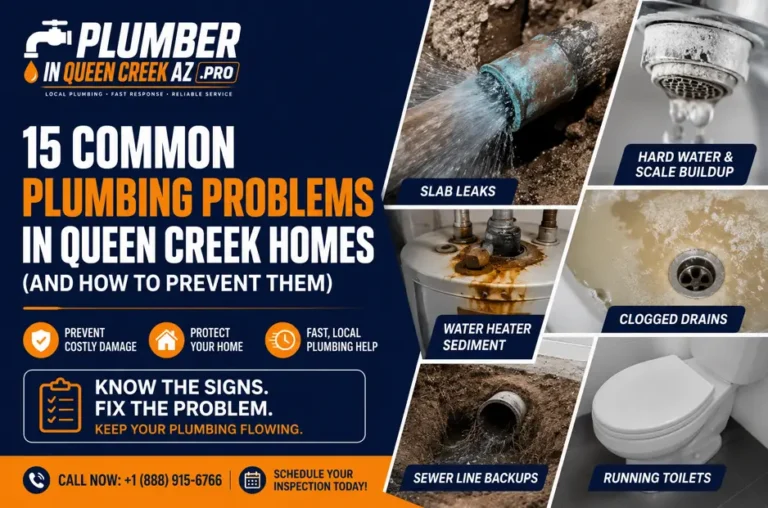
1. Hidden pipe leaks behind walls or under slabs
2. Hard water scale buildup inside pipes and fixtures
3. Sediment accumulation inside water heater tanks
4. Slow drains caused by grease or mineral buildup
5. Aging fixtures nearing the end of their lifespan
6. Toilet leaks that waste water quietly for weeks
7. Water pressure that’s higher than it should be
8. Early warning signs of sewer line trouble
Unique Plumbing Challenges in Queen Creek
A plumber unfamiliar with this area is working with an incomplete picture. The Town of Queen Creek reports water hardness between 6 and 17 grains per gallon, which sits in hard to very hard range. That mineral content is behind a huge share of the wear we see inside pipes, water heaters, and fixtures across Queen Creek, San Tan Valley, Gilbert, Chandler, Mesa, and Florence.
Slab foundations are the norm here too, common from homes near Schnepf Farms out toward San Tan Mountain Regional Park, which means slab leaks come up more often than in areas with basements or crawl spaces. Add Arizona’s intense summer heat, which stresses pipe joints over time, and you’ve got a set of conditions that shape almost every visit we run across the East Valley.
Serving Homeowners Throughout Queen Creek
Our technicians regularly work in Ironwood Crossing, Meridian, Cortina, Hastings Farms, Victoria, Ocotillo Landing, Emperor Estates, San Tan Heights, Harvest Queen Creek, and Sossaman Estates.
Why Homeowners Choose Our Plumbing Team
A few things come up again and again when homeowners talk about why they call us back. Licensed technicians who actually explain what they’re doing. Modern diagnostic equipment that finds the real problem instead of guessing. Transparent communication from the first phone call through the final walkthrough. Upfront pricing that doesn’t shift once work has started. Respect for your home, floor coverings included. And repairs built to actually last, backed by local experience with Queen Creek’s water and soil.
Committed to Industry Best Practices
Every technician on our team is licensed through the Arizona Registrar of Contractors, and our work follows the plumbing code maintained by IAPMO. Where it fits the job, we recommend fixtures certified under the EPA’s WaterSense program, which requires at least 20 percent less water use with no drop in performance. Our approach to water quality also lines up with guidance from the American Water Works Association, the leading nonprofit authority on water treatment nationally. You can check our standing directly through the Better Business Bureau.
Frequently Asked Questions About Plumbing Service Visits
How long does a plumbing service visit usually take? Most visits run one to two hours. Complex diagnostics or larger installations can take longer, especially if the issue is hidden behind a wall or under a slab.
What should I do before a plumber arrives? Clear access to the work area, secure any pets, and jot down when the problem started. These small steps speed up diagnosis considerably.
Will I receive a written estimate? Yes, always. Pricing is provided in writing before any repair or installation begins, so there are no surprises on the final bill.
Can most plumbing problems be fixed during the first visit? In most cases, yes. Some jobs need a specific part ordered, but that’s the exception rather than the rule.
Do plumbing repairs come with a warranty? Yes. Repairs and installations are backed by a written workmanship warranty, detailed clearly at the estimate stage.
Ready to Schedule a Plumbing Service Visit?
Now you know exactly what’s coming. Schedule your appointment with PlumberinQueenCreekAZ or contact our Queen Creek plumbing team today for a free estimate.